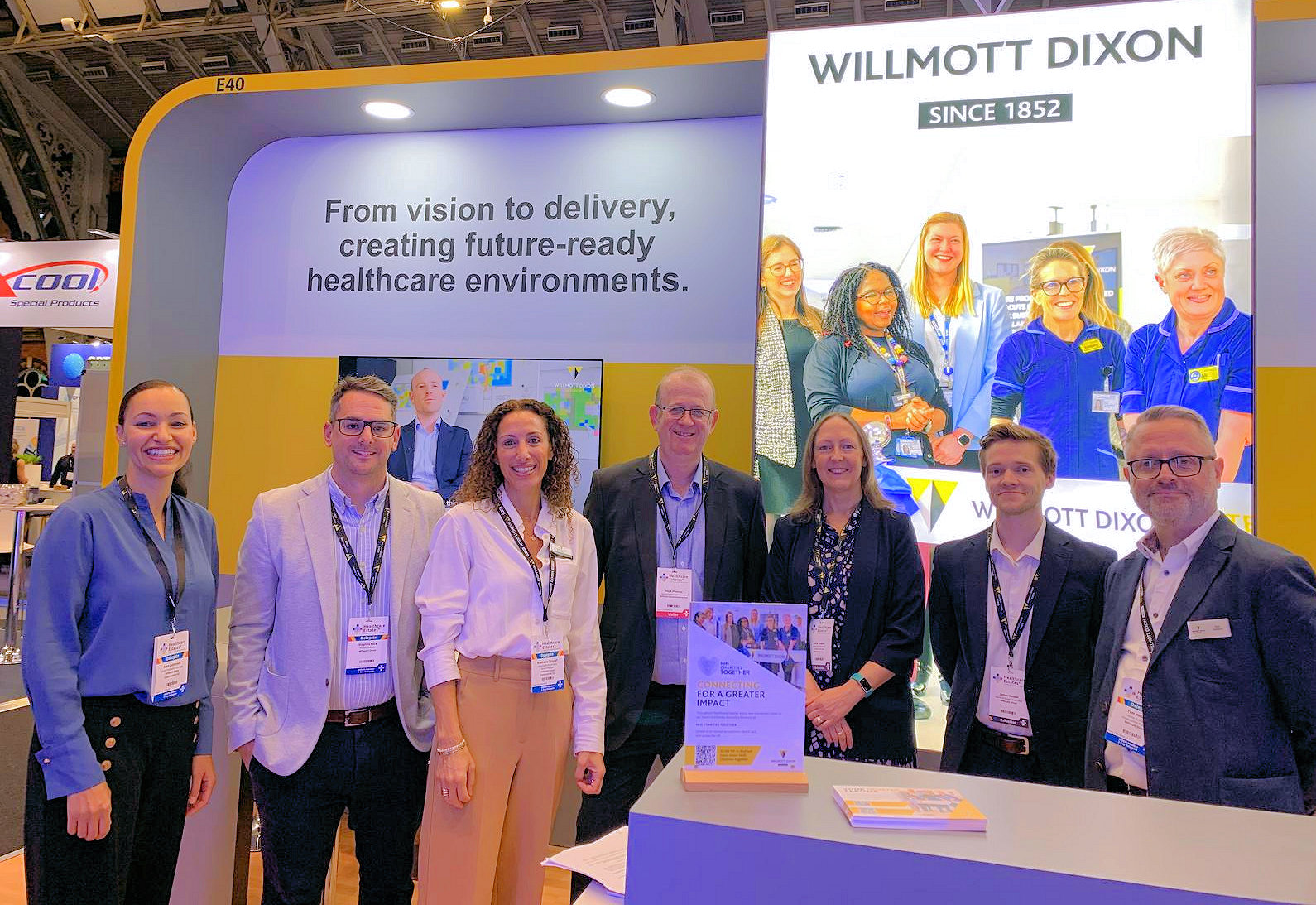
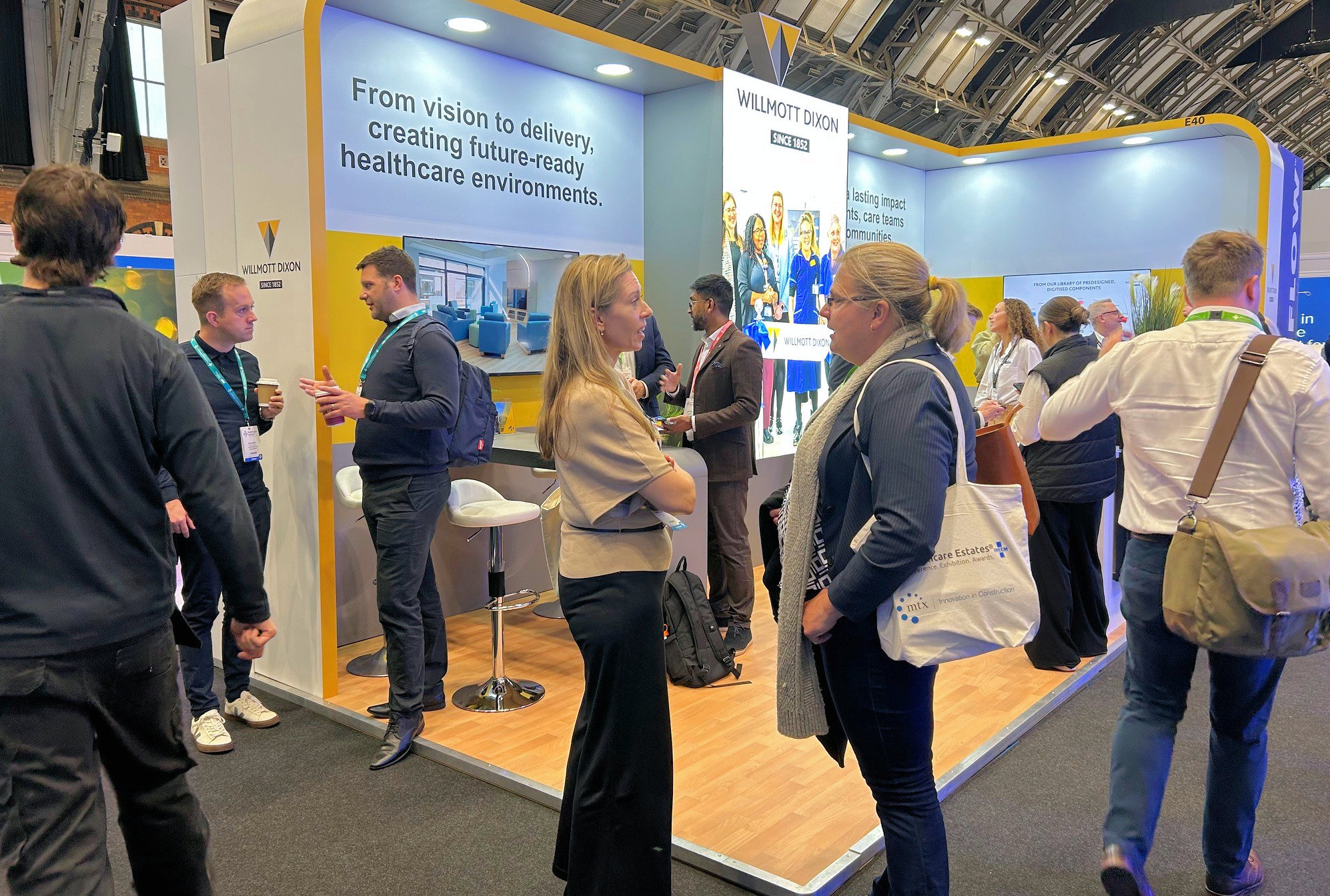
Two thought-provoking days at Healthcare Estates 2026, with some important messages from NHS England and colleagues across the industry about the scale of the challenge facing the NHS estate, but also the opportunities ahead.
The risk is a two-tier estate: new hospitals and neighbourhood health centres on one side, and an ageing estate carrying a growing maintenance backlog on the other. Closing that gap was the thread running through both days.
For me, a few key themes stood out.
Backlog maintenance is a patient safety issue, not just an estates problem
A powerful reminder from David Jones, Director of Estates, Facilities and Capital Development at University Hospital Southampton NHS Foundation Trust, that the growing backlog maintenance challenge cannot be solved by estates teams alone.
With the backlog now at £17.3bn and rising, we need to change the conversation. It is not simply about the cost of repairing buildings, but the impact failing infrastructure has on patient safety, clinical services and ultimately patient care.
Simon Corben, Director and Head of Profession, NHS Estates at NHS England, reinforced this point, encouraging Trusts to capture the actual cost of disruption to clinical services caused by estate failures. This is the evidence needed to strengthen the case for future investment.
The message was clear. We need to work collectively across the system, prioritising investment where it will have the greatest impact on patients.
Making better use of what we already have
Another strong theme was the need to use the existing NHS estate more intelligently.
Dr Shamir Ghumra, Executive Director, Responsible Business at NHS Property Services, highlighted the opportunity to improve productivity, increase patient access and release capital through better utilisation of existing buildings.
Progress is also being made on digital estate intelligence. NHS England's STRATA platform now holds national NHS property asset data, with AI capabilities that could help identify opportunities to accommodate new services, consolidate estate and unlock the development potential of surplus sites.
Alongside this, the forthcoming EstateCode guidance and renewed focus on Development Control Plans should help Trusts take a more strategic approach to their estates.
For me, this is an important shift. Rather than looking at individual buildings or projects in isolation, we need to understand how the estate can work better across whole healthcare systems, including opportunities to collaborate with neighbouring Trusts and wider public sector partners.
Neighbourhood Health Centres: The opportunity is significant, but partnership will be key
Neighbourhood Health was understandably a major topic throughout the conference.
We heard more about the developing pipeline, with around 1,100 submissions received and plans progressing for the next waves of delivery. NHS England is also exploring wider opportunities, including bringing outpatient services into community settings and more than 100 potential Health on the High Street locations.
We also hosted a roundtable discussion at lunchtime on day one, bringing together key NHS, developer and consultant partners from across the industry to explore how we turn the ambition for Neighbourhood Health into deliverable schemes.
One thing was clear from the discussion. There is still a lot to do to marry the emerging pipeline with a consistent understanding of what Neighbourhood Health actually needs to deliver, both in terms of services and the buildings that support them.
The NHS has set out principles for successful centres, including integrated community services, shared and flexible space, digital connectivity, adaptability and sustainability. These provide a useful starting point, but the real challenge will be translating them into viable local solutions.
There is a significant opportunity for genuine partnership working with the private sector, but we must also ensure local authorities and other public sector partners are part of the conversation from the outset. Neighbourhood Health needs to be considered in the context of the wider community, not simply as another NHS building programme.
From a construction perspective, we know how to deliver these buildings, whether repurposing existing estate or developing new facilities. Our track record of more than 30 community health centres, including 16 through NHS LIFT, shows that standardised, repeatable facilities bring real cost, programme and delivery certainty. Our pre-designed CURA platform, used at Grove View, builds on those lessons while retaining the flexibility needed to respond to local requirements.
The harder questions lie in developing the right commercial and funding models, agreeing how risks and responsibilities are shared and creating genuine partnerships capable of delivering at scale.
The private sector has a great deal to offer, not just in terms of finance and construction, but in helping shape viable solutions and unlock the full potential of the programme.
We come to this having worked across the whole system. Alongside our community health track record, we are a construction partner on the New Hospital Programme's Hospital 2.0 Alliance, and our Emergency Care Building at Derriford Hospital in Plymouth was the first Wave 1 scheme to reach main construction. Neighbourhood health only works when it is planned alongside hospital capacity, not as a separate programme. That joined-up view is what we bring, working collaboratively with NHS organisations and wider partners to turn these ambitions into reality.
From strategy to delivery
NHS England also set out its wider plans for the next few years, including the national asset survey, EstateCode, new design guidance and further development of procurement and private finance models.
The proposed Design Guide, drawing on lessons from successful NHS projects, is particularly welcome. There is already a wealth of good practice across the industry, and we should be making much better use of it rather than continually starting from scratch.
Similarly, the renewed emphasis on strategic estate planning and collaboration across organisations is an important step towards making better use of limited capital.
My takeaway
We know the scale of the challenge facing the NHS estate and there is clearly greater capital investment and a growing programme of work ahead. The risk is that new investment creates islands of excellence while the rest of the estate falls further behind.
But funding alone will not solve the problem.
The real opportunity lies in changing how we plan, prioritise, procure and deliver investment, making better use of existing assets, embracing standardisation where it adds value and building stronger partnerships across the public and private sectors.
The construction industry has the capability and experience to support this. The challenge now is to work together to turn the ambition into practical, affordable and deliverable solutions that ultimately improve patient care.
A fantastic couple of days catching up with colleagues, customers and partners across the industry, with plenty of food for thought and, importantly, opportunities to take forward.
To find out more about how we deliver neighbourhood health, read our Neighbourhood Health Centres brochure

